Free Beginner Noso Gingerbread Man Amigurumi Pattern
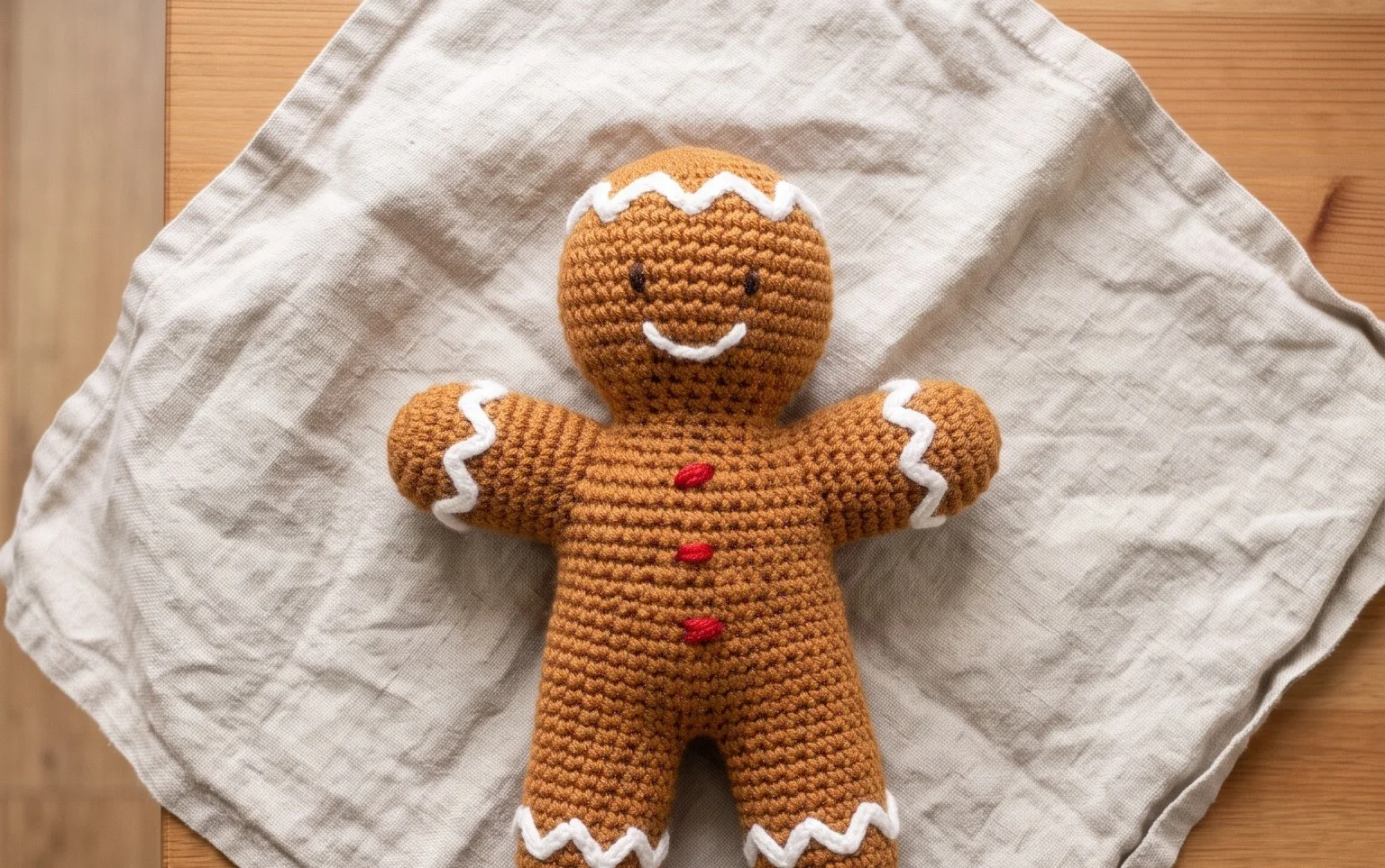
Soft cinnamon-brown yarn, a rounded shape, and little icing-style details give this Noso gingerbread man the look of a small holiday treat. The finished amigurumi is light enough to hang as a decoration or tuck into a gift basket, and its friendly face makes it a sweet handmade present for children and crochet-loving friends. Beginners can enjoy the steady rhythm of working single crochet in rounds, while more experienced makers can add their own embroidered buttons or trim. You’ll learn how to shape a stuffed figure, keep your stitches even, and attach the details securely. The project is satisfying to watch take shape, with each round building the body and a little stuffing turning it into a soft, cheerful keepsake.
Why You’ll Love This Pattern
A firm cotton fabric and simple single crochet rows make this dishcloth useful at the sink and easy to keep track of as you work. The finished cloth measures about 8.5 inches square, a handy size for washing dishes or wiping counters.
- The repeated rows suit a first project after learning the basic crochet stitches.
- One ball of worsted cotton is usually enough, and leftovers can make a striped version.
- The dense fabric holds its shape well and becomes softer with regular washing.
- The finished cloth is practical for a housewarming gift or a small handmade set.
The rows were easy to follow, and the cotton made a sturdy cloth that softened after its first wash.
— Mara, sample tester
Pattern Overview & Skill Level
- Skill Level: Beginner.
- Approximate Time: 2 to 3 hours, depending on your pace and tension.
- Construction: Crocheted flat in turned rows, then finished with a simple edge-weaving step for the yarn tails.
- Finished Dimensions & Sizing: About 8.5 by 8.5 inches, using the gauge below. Small differences are normal for a handmade cloth.
Gauge is 14 single crochet stitches and 16 rows in a 4-inch square, measured after gently washing and drying the swatch. Gauge matters here because a tight fabric feels firm, while a loose fabric can stretch and become less useful for wiping.
Materials & Supplies Needed
- Yarn: About 90 yards of worsted weight cotton yarn, category #4. Choose one color or use two shades for stripes. Cotton absorbs water and tolerates frequent washing.
- Hook Size: 5.0 mm / H-8 crochet hook. Change hook size if needed to match gauge, rather than forcing your hands to maintain uncomfortable tension.
- Notions: Tapestry needle for weaving in ends, scissors, and a ruler or tape measure for checking gauge.
- Substitutions: A cotton-linen blend can work, but may feel less soft and may drape differently. Avoid acrylic for a dishcloth because it absorbs less water than cotton. A thicker or thinner yarn changes the finished size and yardage; make a gauge swatch before starting.
Stitch Guide & Abbreviations (US Terms)
- ch: Chain.
- sc: Single crochet. Insert hook into the stitch, yarn over and pull up a loop, yarn over again, then pull through both loops on the hook.
- st / sts: Stitch / stitches.
- BLO: Back loop only. Work into the loop farthest from you at the top of the stitch. This makes a raised ridge across the fabric.
- Turn: Rotate the work so the next row is crocheted across the opposite side.
The pattern begins and ends each row with one single crochet in the edge stitch. Chain 1 at the start of a row does not count as a stitch.
Step-by-Step Pattern Instructions
Dishcloth
Chain loosely so the foundation edge does not pull tighter than the rows. If your chain is usually tight, use a hook half a size larger for the chain, then switch to the 5.0 mm hook for Row 1.
- Row 1: Sc in the second ch from the hook and in each ch across. Turn. (30 sts)
- Row 2: Ch 1, sc in each st across. Turn. (30 sts)
- Rows 3–34: Repeat Row 2. Each row has 30 sc. At the end of Row 34, do not turn. (30 sts each row)
To make a ridged version, work Rows 2–34 in BLO instead of inserting the hook under both loops. Keep the same stitch count and row count. The cloth will have visible horizontal ridges and may feel slightly less smooth against a sponge or dish.
Finishing
Cut the yarn, leaving a tail about 6 inches long, and pull it through the final loop to secure it. Thread the tail onto a tapestry needle. Weave it through several stitches on the wrong side, change direction, and pass through a few more stitches before trimming. Repeat with the starting tail. Wet and dry the cloth as described in the care section, then measure it. If it is noticeably wider or narrower than 8.5 inches, adjust your hook size on the next cloth.
Care & Washing Instructions
- Wash cotton in a machine or by hand with mild detergent in warm water, up to 40°C, unless the yarn label gives different instructions.
- Lay the cloth flat to dry, smoothing the edges while it is damp.
- Reshape the corners by hand; cotton usually needs only light blocking, not pins or steam.
Pro Tips & Common Mistakes to Avoid
- Keep a relaxed, even grip on the hook. If your foundation chain is much tighter than the first row, the bottom edge will curl inward; remake it with a larger hook or looser chains.
- Count the stitches at the end of every row. The pattern is worked flat, so a stitch marker is not needed at a round start; you can mark the first stitch of a row to help identify the edge stitch.
- When weaving in ends, pass the yarn through the backs of several stitches and change direction once. A short tail pushed through only one stitch can work loose during washing.
- To change the size, start with more or fewer chains and work the same number of rows as the width measurement, adjusting for gauge. A larger cloth uses more yarn, while a smaller one uses less; keep the chain count even only if you want a balanced rectangular shape.
Frequently Asked Questions
Can I use a different yarn for this dishcloth?
Yes. Cotton is the best choice for absorbency and frequent washing. A cotton-linen blend is also suitable, though it can feel firmer. Check the yarn label and make a swatch because other fibers can change the cloth’s texture, size, and drying time.
How can I make the dishcloth larger or smaller?
For a wider cloth, chain more stitches; for a narrower cloth, chain fewer. Work additional or fewer rows to change the height. Keep in mind that a larger cloth needs more yarn, and a different stitch count changes the finished dimensions.
Is this pattern suitable for a complete beginner?
Yes, if you can make a chain and single crochet. The main challenge is keeping the first and last stitches of each row visible. Count 30 stitches before turning so the edges stay straight.
May I sell dishcloths made from this pattern?
Check the designer’s terms before selling finished items, and follow any credit or small-business rules they provide. Do not sell or repost the written pattern as your own.
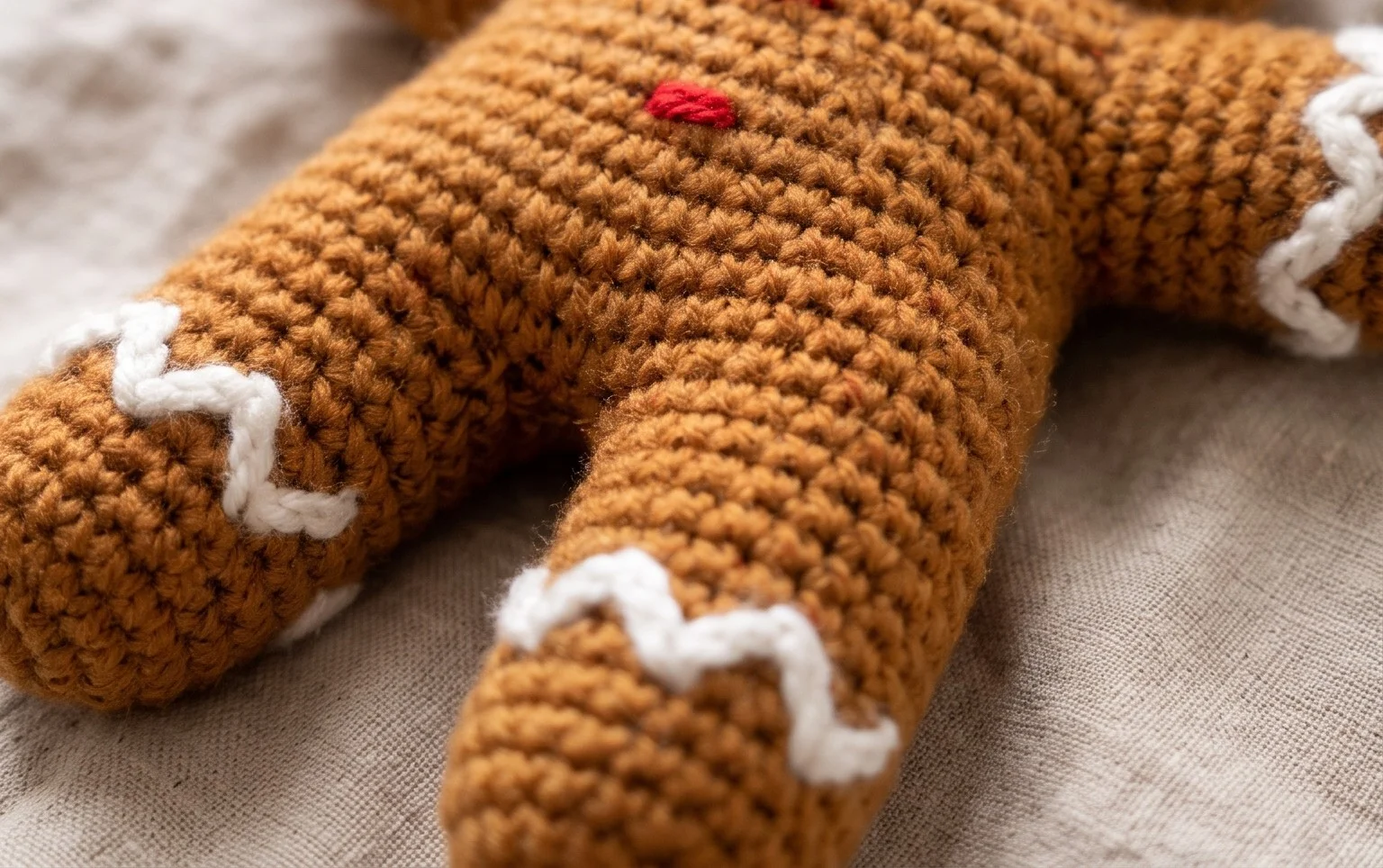
Finishing this little gingerbread man is a lovely way to turn a few rounds of yarn into a soft decoration with plenty of personality. The cinnamon-brown body and small icing details give it a familiar cookie look, and the finished piece is ready to display or wrap as a handmade gift. For a simple variation, use red or green yarn for the buttons, or choose a finer yarn and smaller hook for a smaller ornament. When yours is complete, share a photo on Pinterest or your favorite social media page so other makers can see your version. You can also browse the blog for more free crochet patterns, including small amigurumi projects to make for gifts and seasonal decorating.